Preclinical Formulations for Discovery and Toxicology Tips
- 1.
What Exactly Are Preclinical Formulations for Discovery and Toxicology?
- 2.
Why Preclinical Toxicology Matters in Drug Development
- 3.
The Role of Preclinical in Drug Discovery: More Than Just a Phase
- 4.
Toxicology Approach to Drug Discovery: Safety First, Always
- 5.
Formulation in Drug Discovery: The Secret Sauce
- 6.
Common Vehicles & Excipients in Preclinical Formulations
- 7.
Challenges in Developing Preclinical Formulations for Discovery and Toxicology
- 8.
How Preclinical Formulations Influence Toxicology Outcomes
- 9.
Best Practices for Robust Preclinical Formulation Design
- 10.
Future Trends in Preclinical Formulations for Discovery and Toxicology
Table of Contents
preclinical formulations for discovery and toxicology
What Exactly Are Preclinical Formulations for Discovery and Toxicology?
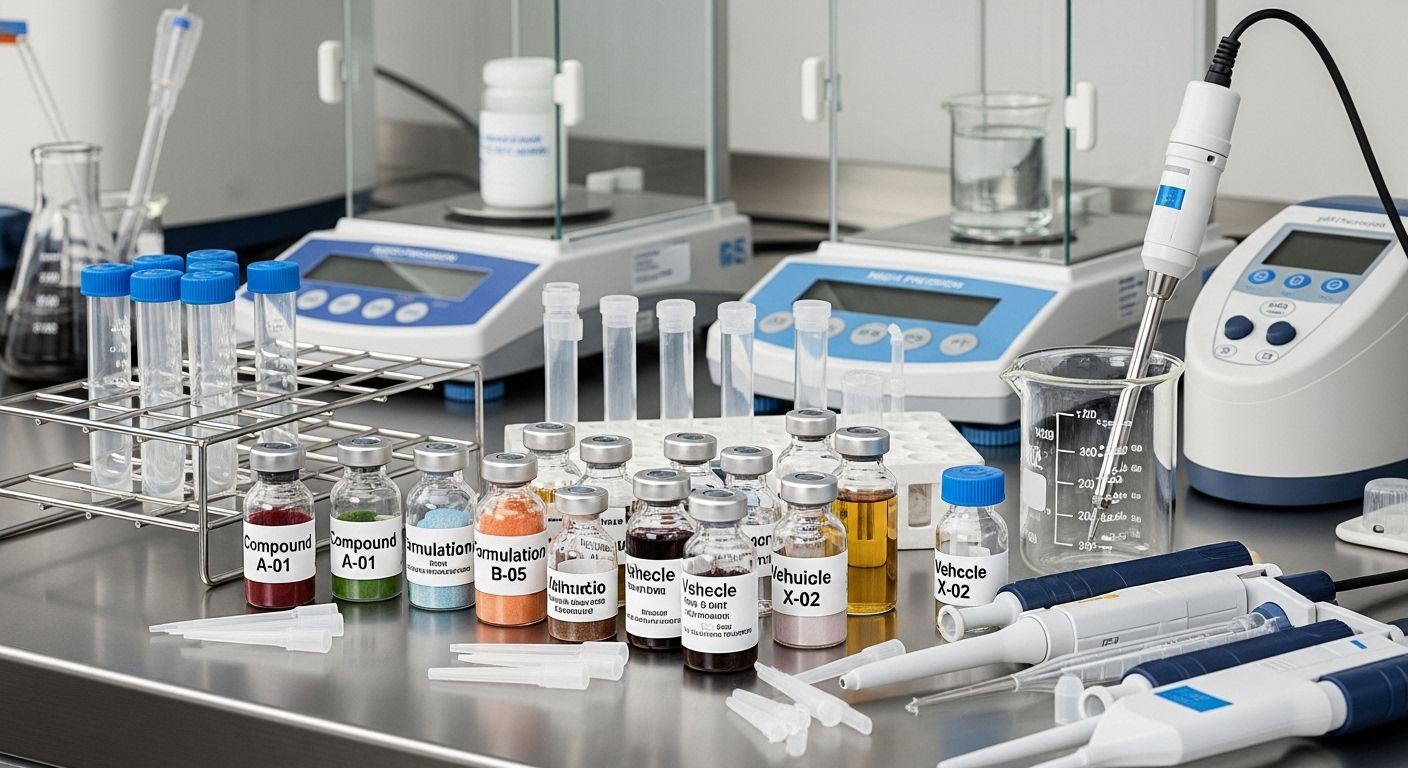
Ever wondered how a molecule scribbled on a lab notepad turns into a life-saving pill? Well, preclinical formulations for discovery and toxicology are the unsung heroes of that transformation. These aren’t just mixtures—they’re carefully engineered vehicles that carry drug candidates through the gauntlet of early testing. Without solid preclinical formulations for discovery and toxicology, even the most promising compound might never see the light of clinical trials. Think of it like sending a fragile heirloom through the mail: you wouldn’t just toss it in a box—you’d bubble-wrap it, label it, and maybe even insure it. That’s what we do with molecules. And yeah, sometimes we spill coffee on the protocol sheet—human error’s part of the charm.
Why Preclinical Toxicology Matters in Drug Development
So, what is preclinical toxicology? In simple terms, it’s the safety checkpoint before humans ever get near the drug. Preclinical toxicology evaluates how a compound behaves in living systems—does it fry the liver? Mess with the heart rhythm? Make mice grow three tails? (Okay, maybe not that last one.) But seriously, preclinical formulations for discovery and toxicology must be stable, reproducible, and biologically relevant to generate trustworthy toxicology data. If your formulation crashes mid-study, you’re not just wasting time—you’re risking misleading conclusions. And nobody wants to greenlight a drug that’s actually a tiny time bomb.
The Role of Preclinical in Drug Discovery: More Than Just a Phase
Let’s cut through the jargon: preclinical in drug discovery isn’t just a box to tick—it’s where dreams meet reality. This stage bridges pure chemistry and real-world biology. Here, preclinical formulations for discovery and toxicology help researchers answer: “Will this molecule actually *do* something in a body?” We tweak solubility, adjust pH, play with excipients—all to mimic how the drug might behave in humans. It’s part science, part witchcraft, and 100% essential. Skip this, and you’re basically throwing darts blindfolded at a regulatory approval board.
Toxicology Approach to Drug Discovery: Safety First, Always
The toxicology approach to drug discovery flips the script: instead of “How well does it work?”, we ask “How badly could it hurt?” Early integration of toxicology—powered by robust preclinical formulations for discovery and toxicology—helps flag red flags before millions are sunk into development. For instance, if a compound causes QT prolongation in dogs at low doses, better to know now than during Phase III. Modern toxicology isn’t just about killing cells in a dish; it’s about predictive models, biomarkers, and yes—even AI. But don’t worry, we still argue over pipette techniques like it’s 1999.
Formulation in Drug Discovery: The Secret Sauce
What is formulation in drug discovery, really? It’s the art of making the impossible… deliverable. Many drug candidates are hydrophobic little gremlins that refuse to dissolve in water—good luck injecting that. That’s where preclinical formulations for discovery and toxicology come in: cyclodextrins, lipid nanoparticles, co-solvents, you name it. The goal? Achieve adequate exposure without skewing pharmacology or toxicology. A bad formulation can make a safe drug look toxic—or a toxic drug look safe. So yeah, formulation scientists? Total MVPs.

Common Vehicles & Excipients in Preclinical Formulations
Not all potions are created equal. Below’s a quick snapshot of go-to ingredients in preclinical formulations for discovery and toxicology:
| Excipient | Use Case | Limitations |
|---|---|---|
| PEG 400 | Solubilizer for oral/IV | Can cause renal toxicity at high doses |
| Cremophor EL | IV solubilization | Hypersensitivity risk |
| HPMC | Suspension stabilizer | Viscosity issues |
| Captisol® | Cyclodextrin for solubility | Costly but clean profile |
Choosing the right combo isn’t just chemistry—it’s strategy. And sometimes, you end up using a vehicle that smells like burnt popcorn. True story.
Challenges in Developing Preclinical Formulations for Discovery and Toxicology
Oh boy, where to start? Limited compound availability, tight timelines, species differences—preclinical formulations for discovery and toxicology face a gauntlet of hurdles. You might have only 50 mg of your star molecule, yet need to dose rats, dogs, and monkeys across multiple studies. Plus, what works in mice might crash in minipigs. And don’t get us started on regulatory expectations—they evolve faster than TikTok trends. Still, we adapt. We innovate. And occasionally, we cry into our HPLC vials.
How Preclinical Formulations Influence Toxicology Outcomes
Here’s the kicker: your preclinical formulations for discovery and toxicology can literally make or break your toxicology readout. A surfactant might irritate the GI tract, mimicking drug toxicity. A high ethanol content could depress CNS function, muddying behavioral assays. Even the pH of your IV solution might cause hemolysis. That’s why formulation scientists and toxicologists need to be BFFs—not just colleagues who nod in the hallway. At Catabasis Pharma, we bake cross-functional alignment into our DNA. Because miscommunication here? Costs more than a failed batch.
Best Practices for Robust Preclinical Formulation Design
Want your preclinical formulations for discovery and toxicology to stand the test of time (and regulators)? Follow these golden rules:
- Start simple: Use minimal excipients—complexity breeds variability.
- Match the route: Oral ≠ IV ≠ subcutaneous. Duh.
- Validate stability: If it degrades in the syringe, it’s useless.
- Document everything: Even that weird color change at 3 PM on a Tuesday.
- Think ahead: Will this scale? Will it translate to humans?
And for the love of chromatography, avoid proprietary vehicles unless you’ve got a backup plan. Regulatory folks hate surprises—unless it’s a birthday cake, maybe.
Future Trends in Preclinical Formulations for Discovery and Toxicology
The field’s buzzing with innovation. Nanotech, AI-driven excipient selection, 3D-printed mini-pills for microdosing—preclinical formulations for discovery and toxicology are getting smarter. We’re also seeing more “developability” assessments upfront, so only the most viable candidates move forward. Sustainability’s creeping in too: less solvent waste, greener chemistry. And while we’re not replacing lab coats with VR headsets yet, the future’s looking… well, less analog. For deeper insights, peep our piece on phases of pharmaceutical development demystified over at the Development section.
Frequently Asked Questions
What is preclinical toxicology?
Preclinical toxicology is the study of adverse effects of drug candidates in animal models and in vitro systems before human testing. It relies heavily on well-designed preclinical formulations for discovery and toxicology to ensure accurate, reproducible safety data that informs clinical trial design and regulatory submissions.
What is preclinical in drug discovery?
Preclinical in drug discovery refers to the phase where potential therapeutics are tested in laboratory and animal models to assess efficacy, pharmacokinetics, and safety. Critical to this stage are preclinical formulations for discovery and toxicology, which enable reliable delivery and exposure of the compound for meaningful biological evaluation.
What is the toxicology approach to drug discovery?
The toxicology approach to drug discovery integrates safety assessment early in development to de-risk candidates. This strategy depends on high-quality preclinical formulations for discovery and toxicology to avoid artifacts and ensure that observed toxicities are truly compound-related, not formulation-induced.
What is formulation in drug discovery?
Formulation in drug discovery involves designing delivery systems that enable a drug candidate to be administered effectively in preclinical studies. These preclinical formulations for discovery and toxicology must balance solubility, stability, and biocompatibility while supporting accurate pharmacological and toxicological profiling.
References
- https://www.fda.gov/media/72281/download
- https://www.ncbi.nlm.nih.gov/books/NBK572095/
- https://www.ema.europa.eu/en/documents/scientific-guideline/ich-s3a-note-guideline-toxicokinetics-step-5_en.pdf
- https://pubs.acs.org/doi/10.1021/acs.jmedchem.0c01234
- https://www.sciencedirect.com/science/article/pii/S093964112100123X